Dine Track
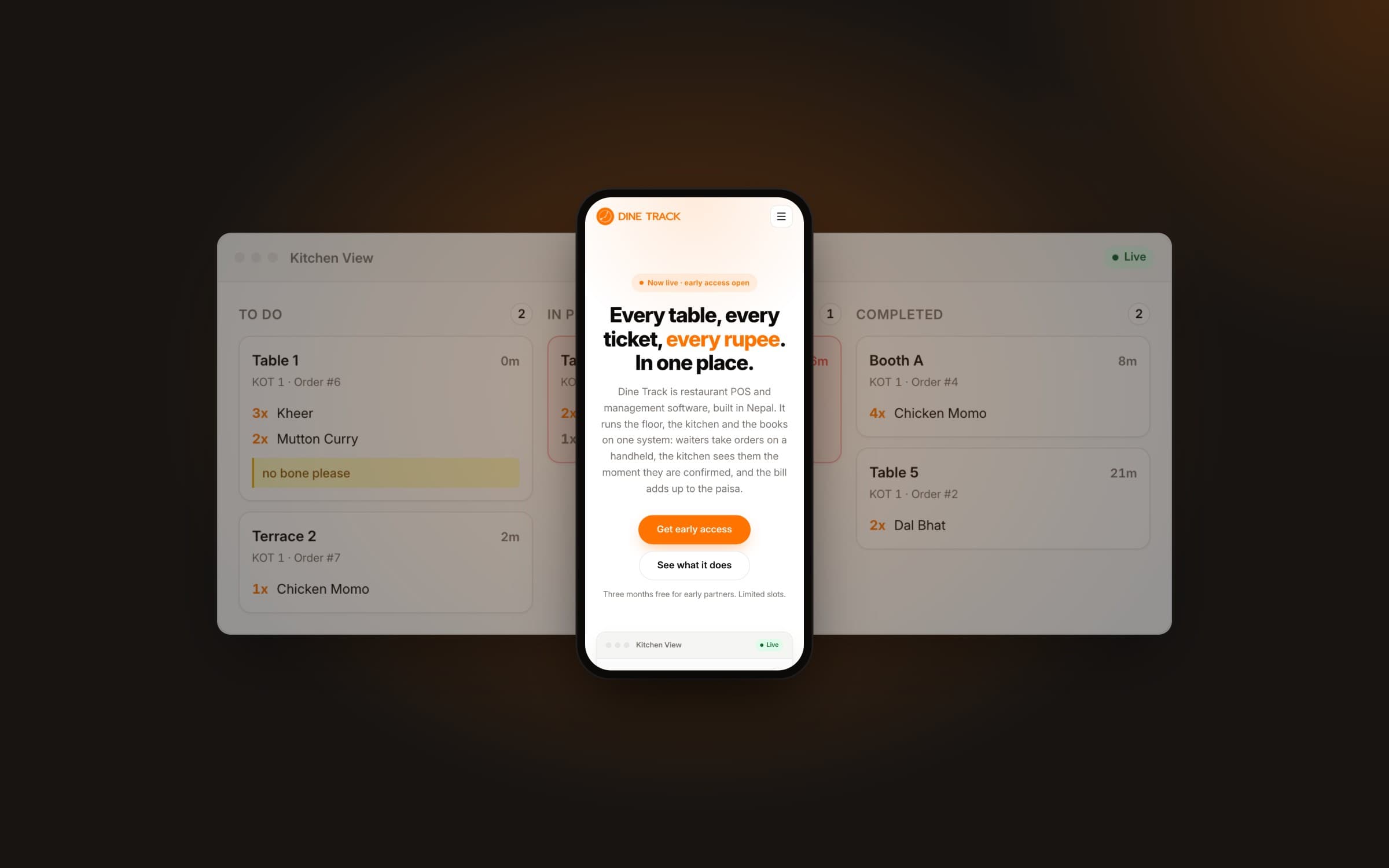
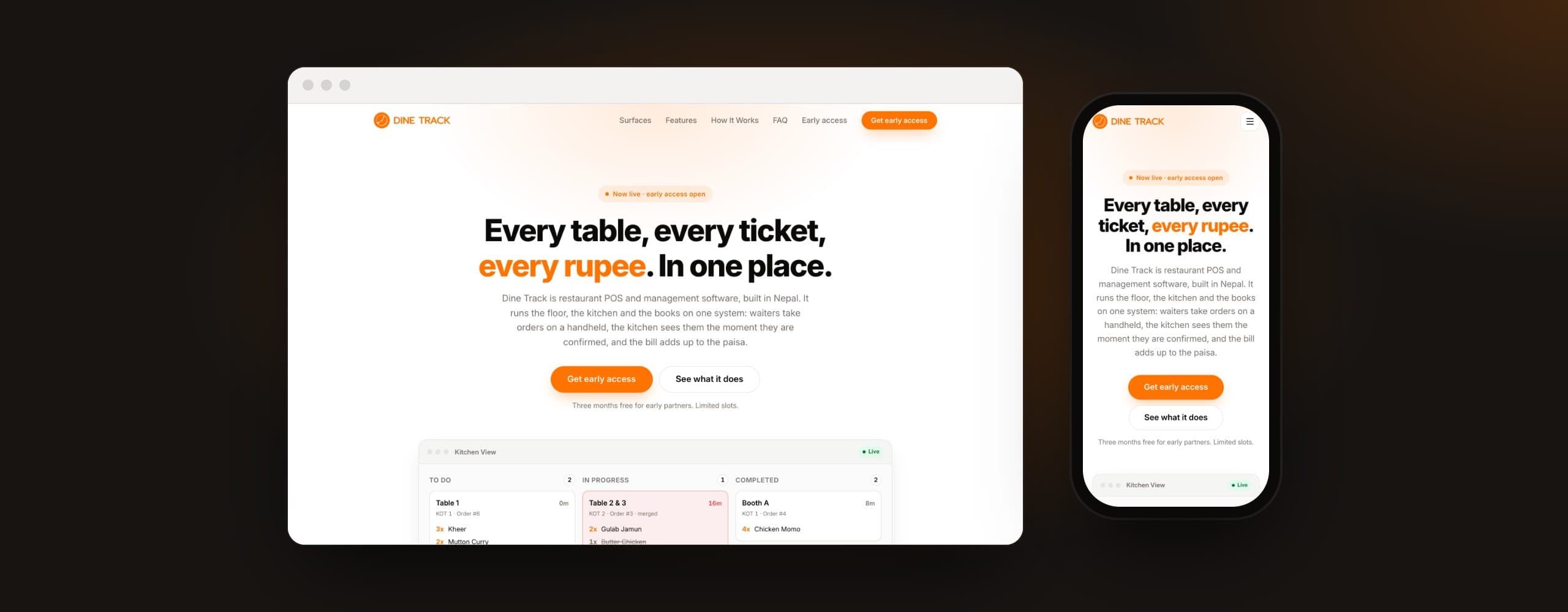
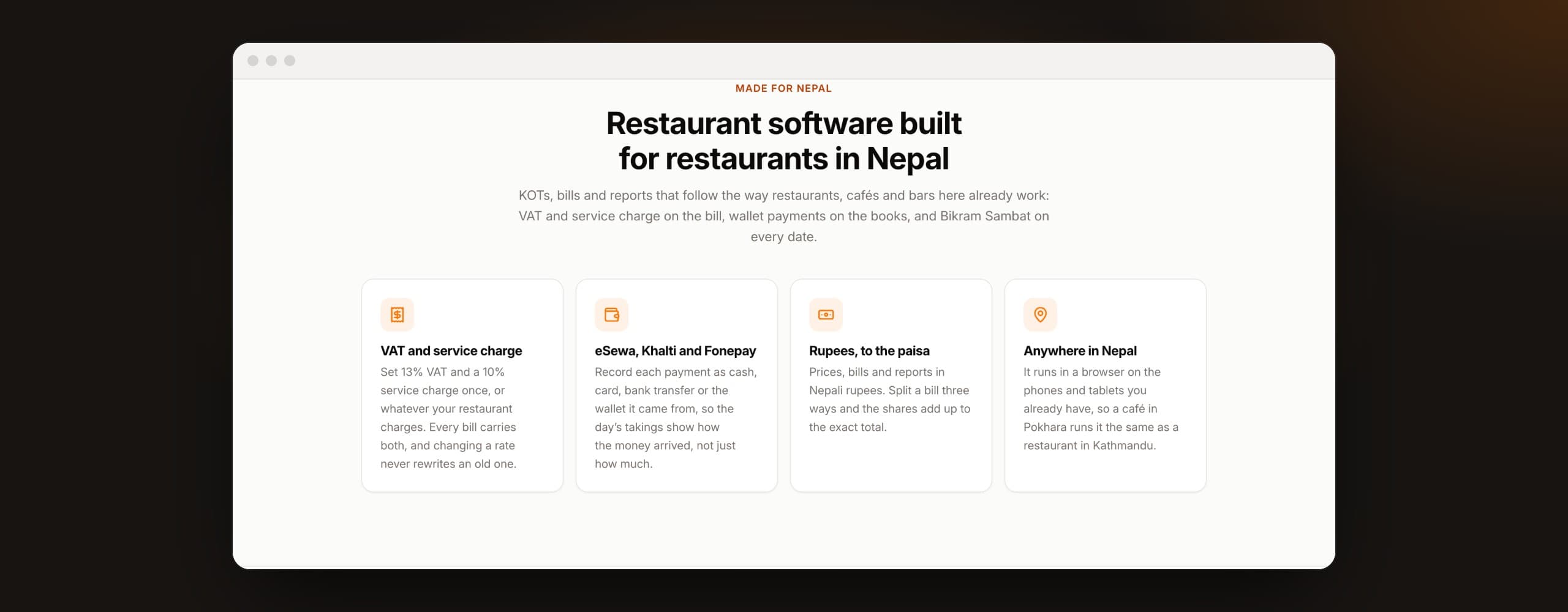
Dine Track, developed by Inicrea Technologies, is restaurant POS and management software built for restaurants in Nepal. Waiters take orders on a handheld, the kitchen sees them live on a kitchen display, and bills split to the paisa with VAT and service charge, while every date reads in Bikram Sambat.
Challenge
Many restaurants in Nepal still run service on handwritten KOTs, a separate billing counter and notebooks for stock and staff. Dine Track set out to put the floor, the kitchen and the books on one system, built around the way restaurants here actually work.
- Orders had to reach the kitchen the moment the floor confirmed them, with no refresh and nothing lost when a handheld dropped off the network.
- Bills had to split by item, into equal shares or by custom amounts and still add up to the exact total, with VAT and service charge stamped on each order.
- A flaky connection and a few repeated taps could never be allowed to take the same payment twice.
- Owners, managers, cashiers, waiters and chefs each needed their own view, enforced on the server rather than only hidden in the interface.
- Every date had to read in Bikram Sambat, and KOTs and receipts had to print on the 80mm thermal printers restaurants already own.
Result
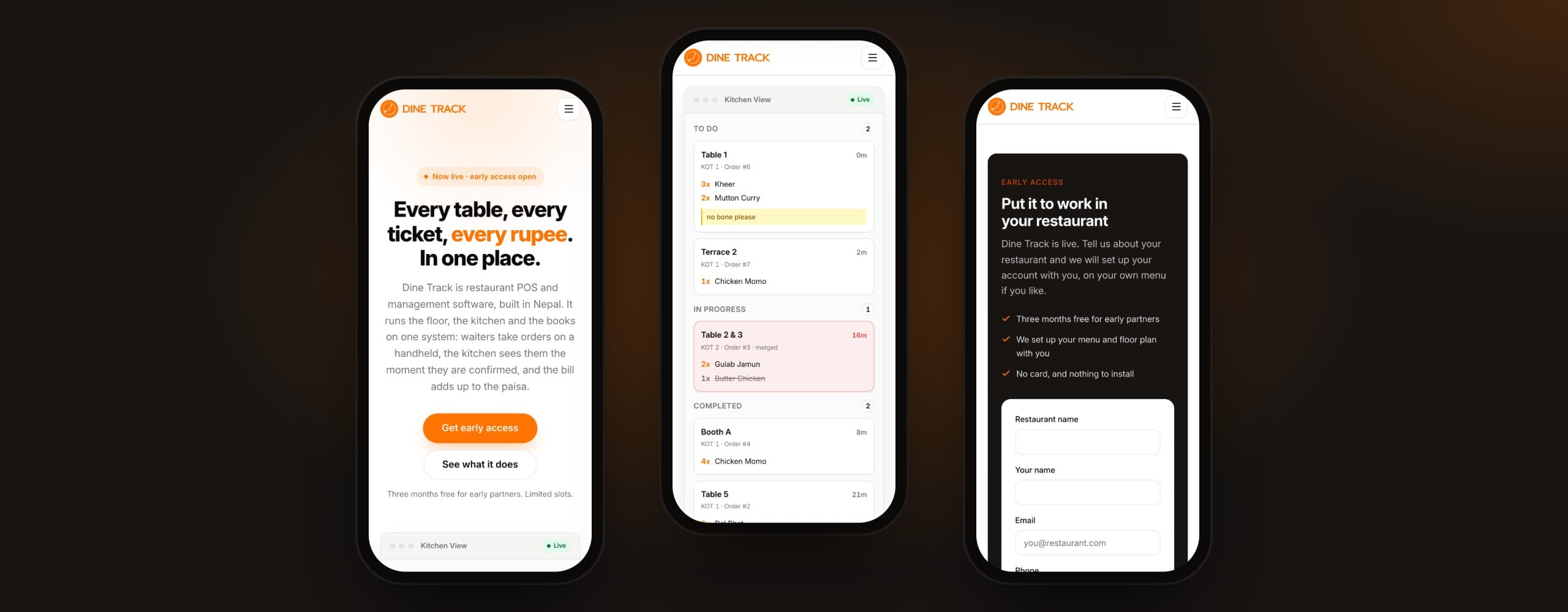
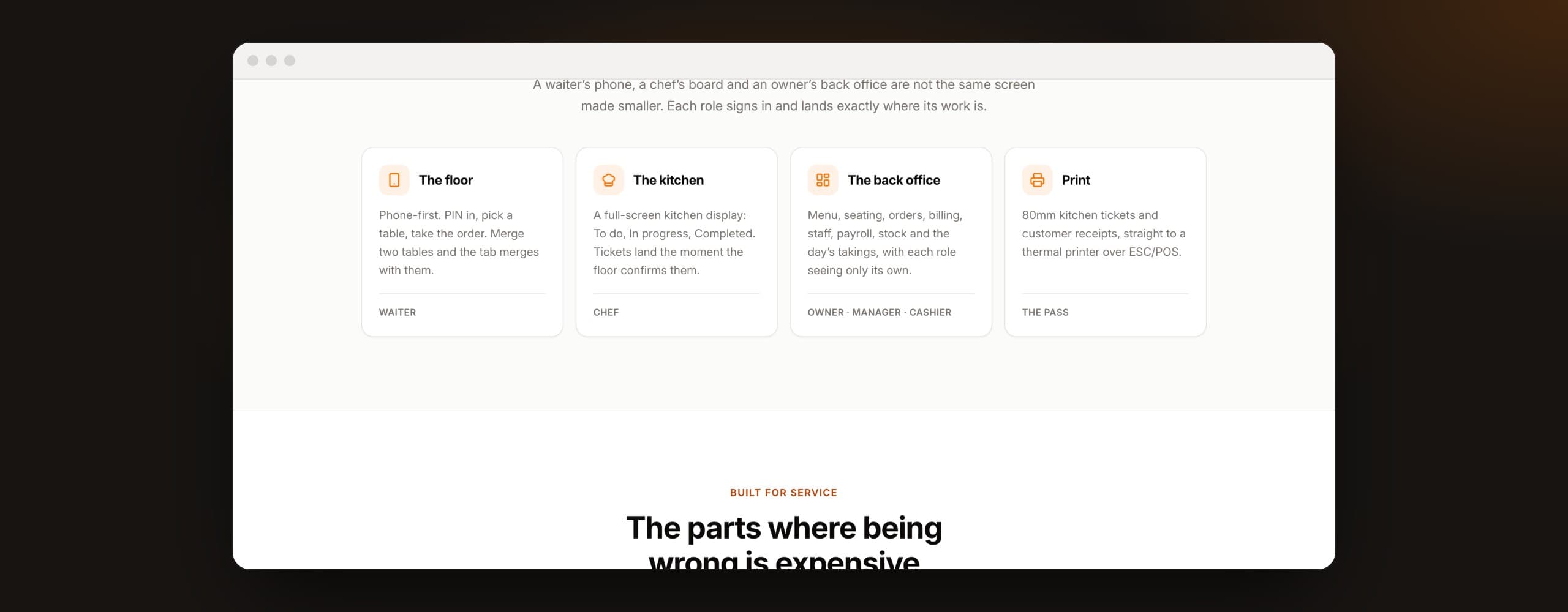
- Four surfaces on one login: a phone-first waiter app with PIN sign-in, a live kitchen display, a back office for owners and staff, and ESC/POS printing for KOTs and receipts.
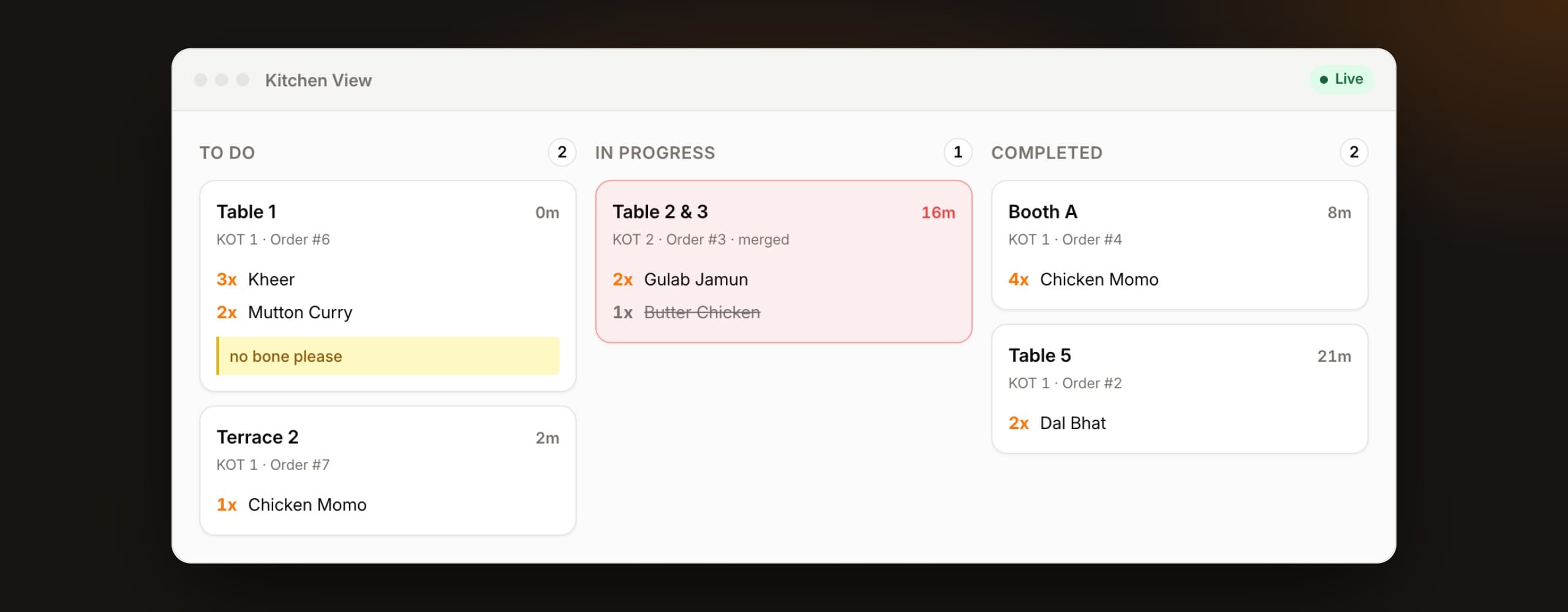
- Kitchen tickets arrive in real time over WebSockets, and a ticket left waiting fifteen minutes turns red.
- Split billing that never loses a paisa, idempotent payments that a double tap cannot duplicate, and voids that keep the record and the reason.
- Payments recorded as cash, card, bank transfer, eSewa, Khalti or Fonepay, feeding the day's takings and reports.
- Table and reservation management, inventory with wastage tracking, payroll, and role-based access for five roles.
- A multi-tenant SaaS built on React, TypeScript, NestJS and PostgreSQL, launched with early access in September 2026 at dinetrack.app.
Gallery
Inicrea Technologies - designing, developing, and delivering digital solutions that help
businesses thrive in a connected world.
businesses thrive in a connected world.
Terms & Condition
Privacy Policy
Copyright © 2026 Inicrea Technologies. All Rights Reserved.